
Eleven minutes before kick-off, the money arrives
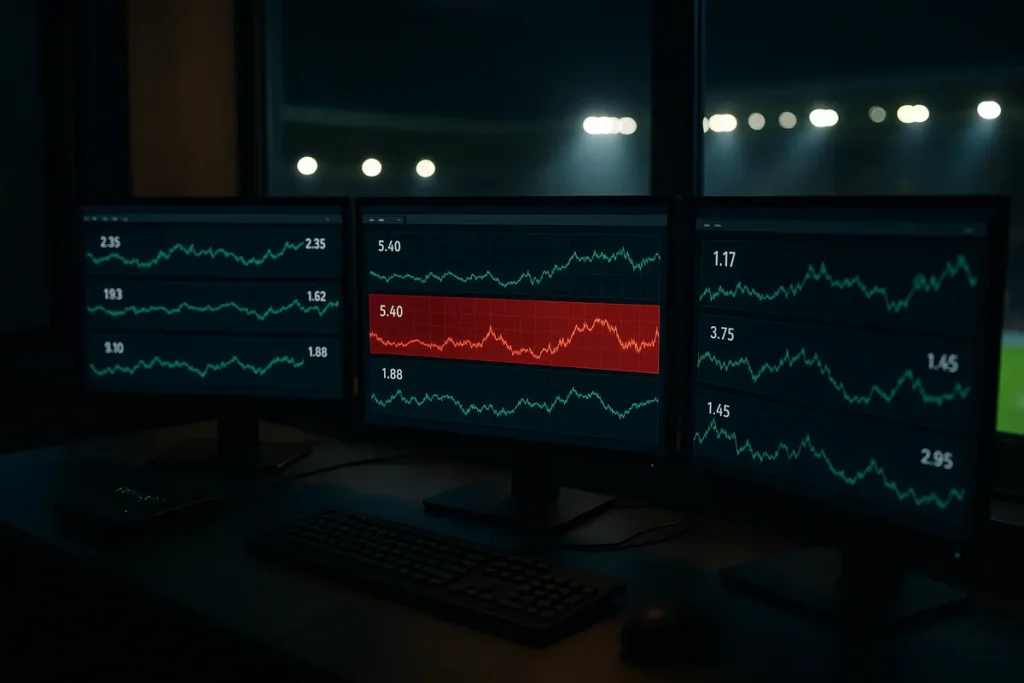
It is a second-division fixture almost nobody has heard of. Then, minutes before the start, a market that normally attracts small change starts absorbing serious stakes across several different betting operators at once, and the price on it collapses without any team news to justify the move. Inside an hour, analysts at three companies are looking at the same pattern, because they all feed data into the same central system. That system is sports betting integrity monitoring: the practice of watching wagering patterns across many operators to spot bets that look like someone already knows the result.
The organisation at the centre of that network is the International Betting Integrity Association (IBIA), and it added another piece to its map in September 2026 when sportsbook platform supplier Altenar signed up to strengthen monitoring standards across African markets. That partnership is a useful way into a subject most bettors never see working, so let’s follow one suspicious bet from the moment it lands to the point where somebody gets banned.
What sports betting integrity monitoring is, and what IBIA actually does
Sports betting integrity monitoring is the continuous analysis of betting activity to identify wagers whose size, timing or pattern suggests the outcome may have been manipulated. It is not about catching people who win. It is about catching people who cannot lose.
IBIA is a non-profit members’ association made up of regulated betting operators and platform providers. Its core function is a monitoring and alert network: members share betting data, IBIA’s analysts look across the whole pool rather than at one company’s book, and when something does not add up, IBIA issues an alert to members, regulators and the relevant sports governing bodies. It also publishes periodic integrity reports breaking alerts down by sport and region. Tennis and football have historically generated the largest share of those alerts, mostly at the lower professional levels where players earn little and scrutiny is thin.
What IBIA is not: a police force. It does not arrest anyone, fine anyone or ban athletes. It detects, evidences and reports. Punishment belongs to sports federations, regulators and, where a crime has been committed, the courts.
How match-fixing detection works in practice
Why the cross-operator view is the whole point
A single sportsbook sees only its own customers. Somebody trying to cash in on a fixed match knows that, so the money gets split: a bit here, a bit there, spread across operators, countries and accounts, each slice small enough to clear normal liability limits without tripping a risk alarm.
Pooling data breaks that up. One operator seeing an unusual ₹4 lakh on a corner-count market might shrug. Eleven operators seeing proportionally identical action on the same market, in the same twenty-minute window, on a match with no public storyline, is a pattern. Monitoring systems handle the first pass automatically, comparing live wagering volumes and odds movements against what that fixture, league and market would normally attract. Analysts then judge the flagged cases, because anomaly detection software has no sense of context and context is usually what decides it.
The red flags that get a human involved
Most suspicious-looking activity has a boring explanation. Integrity teams spend as much time ruling out innocent causes as building cases. These are the recurring signals and their usual harmless twins:
| Signal | What it looks like | Common innocent explanation |
|---|---|---|
| Volume spike on an obscure market | Heavy money on cards, corners or a specific handicap in a low-profile fixture | A tipster post going viral, or one known high-stakes bettor |
| Odds move with no news | Price shortens sharply while nothing has been announced about injuries or line-ups | Team news leaking through social media before official release |
| Coordinated small stakes | Many accounts, similar stake sizes, same selection, narrow time window | Affiliate promotions or copycat betting communities |
| Suspicious in-play timing | Money lands seconds before a booking, a fault or a set ends, then stops entirely | Stream-delay arbitrage by fast bettors watching in the stadium |
| Geographic clustering | Stakes concentrated in accounts tied to the participants’ home region | Ordinary local fan interest in a local team |
The strongest cases stack several of these at once: the wrong money, in the wrong market, at the wrong moment, from accounts with no history of betting on that sport.
From suspicious betting alerts to actual consequences
Here is the sequence once the second-division match from our opening scenario is flagged.
- Automated flag, human review. The system escalates the anomaly. An analyst pulls the betting history behind it: account ages, stake patterns, whether the same accounts appear elsewhere.
- Cross-checking across members. Other operators are queried for matching activity. If the pattern is isolated to one book, it usually dies here as a risk-management matter rather than an integrity one.
- Alert issued. If the pattern holds up, members are notified. Operators can suspend the affected market, void bets under their terms, restrict accounts or hold payouts pending investigation. This is often the fastest visible effect: a market that quietly disappears from the betting page.
- Reporting outward. Alerts go to the relevant licensing regulators and to the sport’s governing body under information-sharing arrangements. IBIA hands over the betting evidence; the sport investigates the people.
- Investigation and sanction. Sports bodies can interview players and officials, examine phone and financial records, and impose bans. Where fraud or organised crime is involved, cases pass to law enforcement.
- Publication. Aggregated alert numbers appear in IBIA’s public reporting, which is how researchers and regulators track where the problem is concentrated.
One caveat worth stating plainly: an alert is not a verdict. A meaningful share of alerts are closed after investigators find a legitimate explanation. That is the system working as intended, not failing.
Why any of this matters when you are the one placing the bet
Betting fair play sounds abstract until you price it out. Every bet you place assumes the event is a genuine contest and the odds reflect real probabilities. If a player has agreed to concede a set, your stake is not a calculated risk any more. It is a donation to somebody who already knew.
Monitoring changes three things for the ordinary bettor:
- Prices you can trust more. Markets that attract corrupt money get suspended or capped, which limits how badly the odds you are quoted can be poisoned by inside information.
- Fewer voided-bet surprises. Operators do void or withhold payouts on markets linked to manipulated events. Detection before and during a match reduces how often innocent bets get caught in that mess after it.
- A signal about the operator itself. A sportsbook that shares data with an integrity body is a sportsbook subject to outside scrutiny of its betting flows. That does not guarantee good customer service, but it tells you something about how seriously the operator treats regulatory compliance.
None of it changes the underlying maths. The bookmaker’s margin is still built into every price, and integrity monitoring is not a route to better returns. It just means you lose to the margin rather than to a fix.
The Altenar-IBIA partnership and why Africa is the test case
The Altenar deal matters less as a headline than as a sign of where monitoring coverage is expanding. Altenar supplies sportsbook technology to operators; joining IBIA extends the monitoring net to the betting flows running through that platform.
The commercial context explains the urgency. Citing H2 Gambling Capital data, IBIA’s 2025 Sports Betting Integrity Report projects total African gross gaming revenue rising from US$3.5bn in 2021 to US$19.4bn by 2030, with online betting alone accounting for US$16.4bn of that. Rapid growth in mobile-first markets with young regulatory frameworks is exactly the environment fixers look for: liquid betting markets, lower-profile domestic competitions, and supervision still catching up.
Bringing platform suppliers into the network rather than only individual brands is an efficient way to close that gap, because one integration can cover many operators at once. It is a structural improvement, not a solution. Monitoring only sees the regulated market; money placed with unlicensed books sits outside the data pool entirely, which is the standing weakness in every integrity system worldwide.
What this means for bettors in India
Indian bettors are exposed to the same markets, often the same low-tier international fixtures, and increasingly the same operators that supply Africa and Europe. Practical things you can check before you stake:
- Does the operator hold a licence from a recognised regulator, and does it publish that information clearly?
- Is it a member of an integrity body, or does its platform provider participate in one?
- Do the terms explain, in plain language, when bets can be voided for integrity reasons?
- Do markets on obscure competitions have sensible limits, or will the book take any amount on anything? Unlimited liability on a fourth-tier match is not generosity.
Treat integrity credentials as one item on a broader betting safety checklist alongside payment reliability and KYC handling. And keep the basics in place: set deposit and loss limits, bet only money you can afford to lose, and use self-exclusion tools if betting stops being entertainment. If it becomes a problem, seek help from a qualified support service.
Frequently asked questions
How does IBIA detect match fixing?
By pooling betting data from member operators and analysing it for anomalies: volumes far above normal for a fixture, odds movements unsupported by news, coordinated stakes across multiple accounts, and suspiciously timed in-play bets. Automated systems flag the outliers; analysts confirm or dismiss them by cross-checking activity across members.
What is sports betting integrity monitoring?
The ongoing surveillance of wagering patterns to identify bets that suggest an event has been manipulated. It combines anomaly detection software, human analysis and information sharing between operators, regulators and sports governing bodies.
How are suspicious bets flagged, and what happens next?
An anomaly is escalated for analyst review, cross-checked against other operators’ data, and, if it holds up, turned into an alert sent to members, regulators and the relevant sport. Operators may suspend the market or restrict accounts, while the sport investigates the participants and imposes any sanctions.
Does an integrity alert mean a match was fixed?
No. An alert means the betting looked abnormal enough to warrant investigation. Plenty are resolved with legitimate explanations, from leaked team news to a single large bettor moving a thin market.